St. College Faculty Correspondence
PI
Version: 7 (current) | Updated: 12/16/2025, 12:05:39 AM | Created: 12/15/2025, 11:47:04 PM
Added description
Description
St. College Faculty Correspondence Collection (c. 1900)
Overview
The St. College Faculty Correspondence Collection is a digital assemblage of early‑20th‑century documents relating to the administration, faculty deliberations, and diploma practices of St. College. Housed by the Arke Institute, the collection is cataloged as a “Collection” type and is dated to the year 1900. Materials are presented in scanned image format (JPEG) with accompanying OCR transcriptions, and are primarily composed in English.Background
The provenance of the collection derives from the internal records of St. College, a higher‑education institution whose faculty engaged in a series of administrative disputes in the spring of 1900. The correspondence reflects tensions over the issuance of an “invalid diploma,” a matter that prompted faculty meetings, resolutions, pledges, and ultimately a formal refusal by an unnamed faculty member to endorse the document. The creator of the documents is unknown, and the collection was digitized and made publicly accessible through the Arke Institute’s PINAX repository.Contents
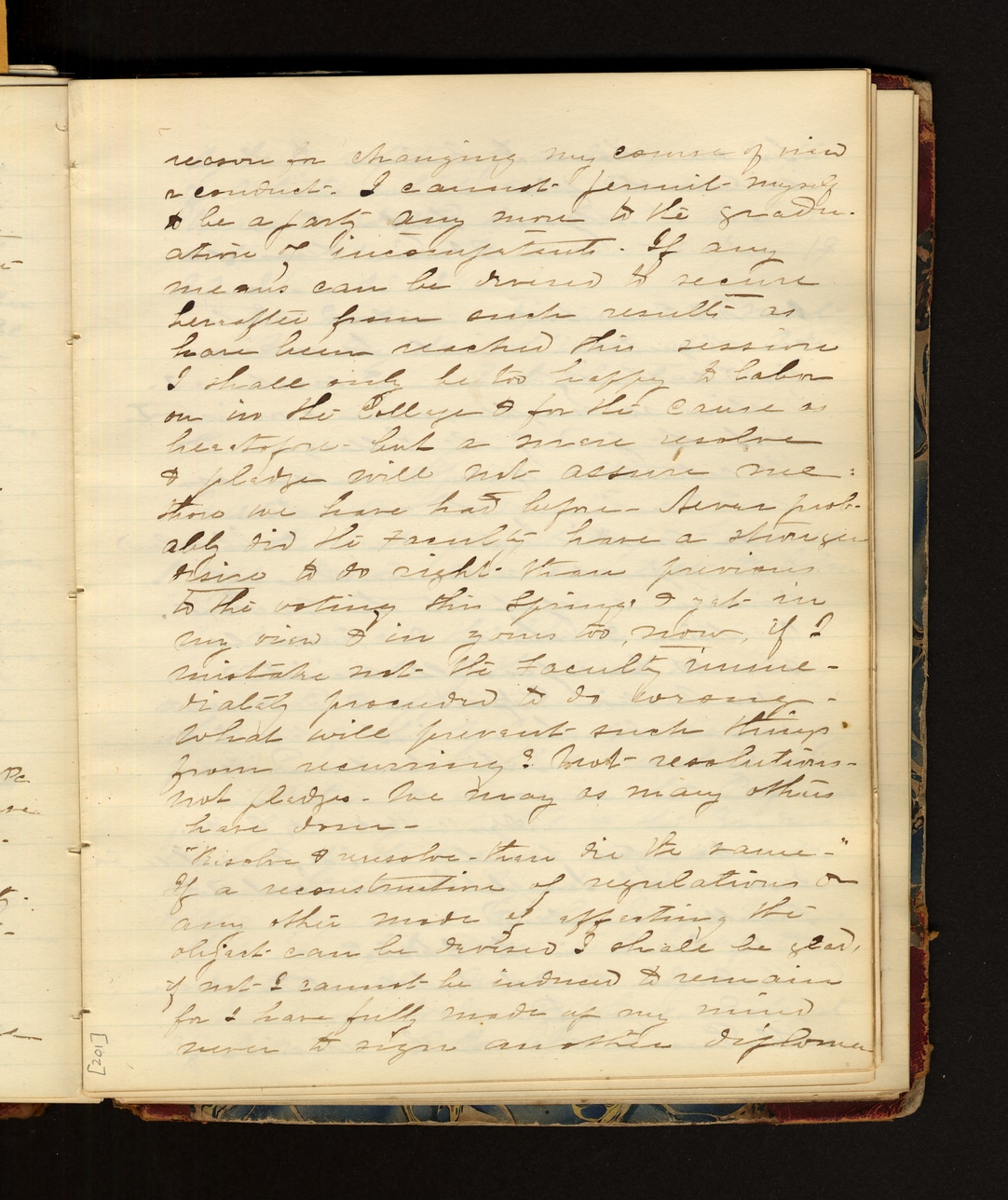
The core item in the collection is a scanned letter (file scan_1.jpg) authored by an unidentified faculty member. The OCR text reveals a candid expression of dissent: the writer refuses to sign the contested diploma, critiques the faculty’s reliance on “resolutions” and “pledges,” and calls for a reconstruction of regulations to prevent recurrence of the perceived wrongdoing. The letter references a faculty meeting held in the spring of 1900, the “Cause” for which the writer remains committed, and a broader concern that the faculty may continue to act improperly without substantive procedural reform. Supplementary metadata (relationships.json) links the document to entities such as “stcollege,” “stcollegefaculty,” “invaliddiploma,” “facultymeetingspring1900,” and thematic tags including “resolution,” “pledge,” and “wrongaction.”Scope
The collection is limited to correspondence from circa 1900 concerning St. College’s faculty governance and diploma legitimacy. Geographic focus is confined to the institution itself, with no external institutional records included. Subject matter encompasses higher‑education administration, faculty decision‑making processes, and the ethical considerations surrounding academic credentials. While the current digital holdings consist of a single scanned letter, the collection’s metadata suggests the potential for additional related documents—such as meeting minutes, resolutions, and further correspondence—pertaining to the same dispute.Relationships
Extracted Entities (11)
- st college(01KCJ6TNW1EJ3S7HGDQFQ4NFY4)
- st college faculty(01KCJ6TNYTB4W7EAK8D150X872)
- unknown author(01KCJ6TP1TRJHDYV18P01Z1SFS)
- letter invalid diploma refusal(01KCJ6TP43ZY32ZQNDJJFR66Q2)
- invalid diploma(01KCJ6TP6M36VCRN93DNGVW693)
- faculty meeting spring 1900(01KCJ6TP8SJXXY5NPPFQC4T4F4)
- cause(01KCJ6TPB7TMSBZREQG3C1PG2F)
- resolution(01KCJ6TPEYWY09M33XBTRTTZ0C)
- pledge(01KCJ6TPRD6E0BYTMFPEQM5RW0)
- wrong action(01KCJ6TPVBP51EDDG8BEN9EF5Q)
- date 1900(01KCJ6TPZKYXYBHV3SMHKA0AA8)
Metadata
Files (1)
OCR Text
rescuing or changing my course of view or conduct. I cannot permit myself to be a party any more to the gradations or incapacitants. If any means can be devised to secure herself from such results as have been reached this session, I shall only be too happy & labor on in St. College & for the Cause as heretofore—but a mere resolve & pledge will not assure me: thus we have had before—several probably did so & really have a stronger desire to do right than previous to the voting this Spring & yet—in my view & in yours too, now, if I mistake not—the faculty immutably proceed to do wrong—what will prevent such things from recurring? Not resolutions—not pledges. One may as many others have done—"resolve & unresolve—true in the same"—If a reconstruction of regulations or any other mode of effecting the object can be devised I shall be glad, if not—I cannot be induced to remain for I have full made up my mind never to sign an invalid diploma.
Version History (7 versions)
- ✓ v7 (current) · 12/16/2025, 12:05:39 AM
"Added description" - v6 · 12/15/2025, 11:51:53 PM · View this version
"Updated extracted entities list (20 new)" - v5 · 12/15/2025, 11:49:14 PM · View this version
"Added PINAX metadata" - v4 · 12/15/2025, 11:47:50 PM · View this version
"OCR: Updated 1 refs" - v3 · 12/15/2025, 11:47:05 PM · View this version
"Added to parent 00000000000000000000000000" - v2 · 12/15/2025, 11:47:04 PM · View this version
"Set parent_pi on children" - v1 · 12/15/2025, 11:47:04 PM · View this version
"Initial discovery snapshot"